
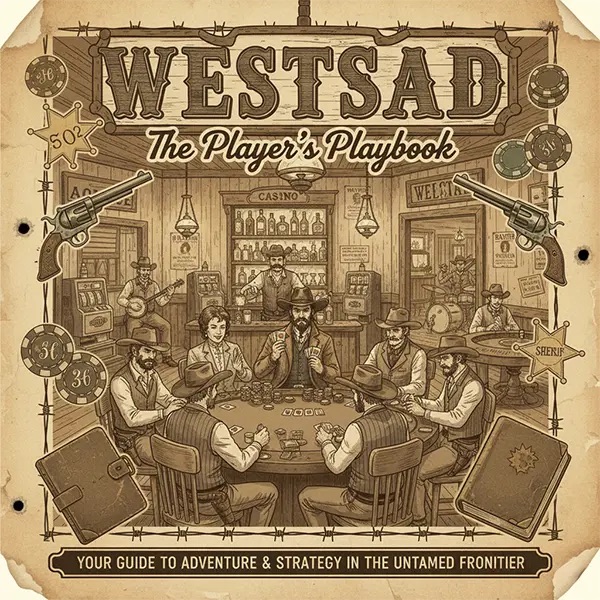
Beyond the Bluff: 5 Poker Strategies for the Modern Gunslinger
It's High Noon at the Online Felt
A Gunslinger’s Welcome
The digital saloon is buzzing tonight, partner. Cards snapping, chips clinking, strangers staring each other down across glowing screens. Most folks play like scared townsfolk — checking, calling, hoping nobody notices them breathing. But you’re not here to hide behind the bar. You’re here because something in your gut says you’re meant to run this table.
An aggressive poker strategy for online games isn’t just a set of moves. It’s a way of carrying yourself, the same way a gunslinger walks into a dusty room and makes every pair of eyes flinch. It’s knowing when to strike, when to shove, when to force a duel even before your opponent realizes what story you’re telling.
The truth? Bluffing is the smallest piece of this puzzle. The real outlaw’s edge comes from pressure — relentless, focused, calculated pressure. The kind that forces weaker players to fold hands they should’ve fought for. The kind that makes you the shadow everyone’s afraid to challenge.
If you're ready to dominate the table and forge a true winning poker mindset, saddle up. This guide is your first step in transforming from a hesitant settler into a modern outlaw — the kind who doesn’t just play the game, but commands the showdown.
What is the Gunslinger's Code? The Philosophy of Aggressive Poker
Every true outlaw follows a code. Not written, not spoken — carved into their bones. Same goes for a player running an aggressive poker strategy for online games. This isn’t madness or blind bravery. This is calculated violence. Controlled fire. The art of putting your opponent to the test hand after hand until they crack first.
Folks often ask, what is aggressive poker? It’s simple: you act, they react. You lead the hand, they scramble to keep up. You apply the strain. You bend the pot to your will by forcing difficult decisions. That pressure is the outlaw’s biggest weapon — not the cards, but the story told with each bet.
A lot of settlers play tight and passive — checking, calling, waiting for the stars to align. That’s the opposite of the gunslinger way. A modern outlaw plays tight vs loose aggressive depending on the situation, changing tempo like a horse shifting between gallop and trot.
But even the wildest shooter needs grounding. A gunslinger who ignores GTO poker basics is nothing but a loose cannon waiting to get ambushed. Understanding pot odds, board textures, and the mathematics of pressure gives you the structure to break rules with purpose.
At its core, aggressive poker is psychological warfare. It shapes your table image in poker — the image of the outlaw who forces the showdown instead of fearing it. A player who fires first and makes everyone else think twice before challenging him.
The Gunslinger's 5 Commandments of Domination
1. Master the Dueling Ground (Positional Warfare)
A real gunslinger never starts a fight on uneven dirt. In poker, the ground beneath your boots is your position — and having the last say in a hand is the closest thing to cheating the frontier allows. Mastering poker position strategy is the outlaw’s first law.
The importance of position in poker can’t be overstated. When you act last, you gather information nobody else has. You see who hesitates, who fires too early, who’s just trying to survive. That’s the essence of playing in position vs out of position — one gives you control, the other leaves you guessing.
Exploit the button and cutoff like they’re prime dueling ground. These positions give you the late position advantage — the power to dictate pot size, pace, and pressure. That’s how a gunslinger takes the reins of the table.
2. Fire the Warning Shot (The Calculated C-Bet & Semi-Bluff)
A gunslinger doesn’t need to hit the target to win a duel. Sometimes a warning shot does the job. In poker terms, that’s your continuation bet — pressure wrapped in confidence.
Knowing when to bluff in poker separates the town fool from the feared outlaw. A good c-bet punishes hesitation, folds out weak holdings, and lets you win pots even when the flop didn’t greet you kindly.
Study continuation bet basics. Mix in a semi-bluff strategy with hands that have potential — strong draws, overcards, momentum. And keep your poker bluffing frequency unpredictable, or the table will start calling you down out of spite.
3. Size Up Your Rivals (Exploiting Tight & Weak Players)
Before any duel, a gunslinger studies his opponent’s breathing, stance, heartbeat. At the online felt, you’re doing the same — tracking patterns, fear, comfort. Tight players? They’re your cattle to herd.
Learning the art of exploiting tight players is one of the most profitable skills in the game. These folks fold too often, fear pressure, and only enter pots with strong holdings. Which means you should target them relentlessly.
Use 3-bets to bully. Fire flop raises when they show weakness. If you understand how to play against weak poker players, you can bleed them slowly without them even noticing. Study player types in poker and learn to read subtle online poker tells — timing, bet sizing, hesitation. Every clue matters.
4. Isolate for the Showdown (Mastering the Heads-Up Duel)
A full saloon brawl? Too chaotic. A one-on-one duel? That’s where skill shines. In poker, you force that duel with the isolation raise.
Heads-up poker tips always start with the same truth: you want weak players alone. Kick out the posse. Make it you vs. the target. That’s where your edge grows sharpest.
Master isolation play poker strategy by raising over limpers or timid callers, pushing the rest aside. Use 3-betting light for value to break their confidence. Once heads-up, shift gears and focus on how to play post-flop against a single opponent whose tendencies you can exploit with surgical precision.
5. Know When to Go All-In (Applying Pressure with 3-Bets)
Drawing your weapon after someone else has drawn theirs — that’s the spirit of the 3-bet. It’s a declaration, a challenge, a threat wrapped in chips.
Aggressive 3-betting strategy isn’t just for monsters. It’s for moments when your opponent raises light or gets too comfortable. That’s when you strike. Learning when to 3-bet bluff turns marginal hands into weapons.
Study the poker squeeze play explained: when there’s one raiser and one caller, a big re-raise crushes them both. That’s frontier physics. Pure pressure. Pre-flop dominance at its sharpest. And above all, remember: nothing defines pre-flop aggression like a well-timed 3-bet.
When to Holster Your Irons: The Limits of the Gunslinger Style
Even the deadliest outlaw knows better than to fire every bullet in his belt. Pure aggression without restraint turns you predictable — easy to trap, easy to ambush. A real gunslinger survives because he shifts gears, watches the room, and knows when silence beats spectacle.
This is the art of adjusting your poker strategy. If the table has labeled you wild, if your image is spiraling, it’s time to slow that horse down. Strong, thinking opponents — the “sheriffs” of the digital saloon — will start calling lighter and re-raising harder if you don’t adapt.
That’s when you learn when to slow play in poker. Let your monsters breathe. Trap the eager deputies who think you’re bluffing again. Turn their assumptions into payroll.
And don’t underestimate emotional danger. Avoiding poker tilt is half the battle. Tilt turns outlaws into amateurs — firing without aim, chasing without logic, bleeding chips across the canyon floor.
In messy pots with too many callers, holster your iron. Use multi-way pot strategy and play tighter. No single outlaw can control a full saloon brawl. Pick your battles with intent, or you’ll get buried under the dust.
The Final Draw: Becoming the Feared Player at the Table
Outlaws aren’t born. They’re forged — hand after hand, decision after decision, pressure after pressure. If you’ve followed the commandments, then your path toward a dominant aggressive poker strategy for online games is already carved into the desert floor.
Position, controlled fire, exploiting weaklings, isolating targets, and drawing your revolver with the 3-bet — together they form a winning poker summary that separates the settlers from the legends.
To master this world, you don’t need the loudest voice or the flashiest plays. You need courage, discipline, awareness, and the willingness to push first. That’s how you become more than a player — that’s how to be a feared poker player at any digital saloon.
Now take these tools, practice them, sharpen them… and walk into your next table like the desert wind itself.
Questions from the Saloon (FAQ)
Q: How do you beat tight, passive poker players?
If prospectors are folding too often, you punish them. Pure and simple. Relentless aggression and targeted pressure make exploiting tight players one of the easiest paths to profit.
Q: Is it better to be aggressive or passive in online poker?
Between aggressive vs passive poker style, aggression wins more pots, builds fear, and controls the table — but only when used with discipline.
Q: What is GTO poker and do I need it for this strategy?
GTO poker basics give you the structure to avoid major leaks. Even outlaws need to know the official rules before breaking them.
Q: What are the best hands to 3-bet bluff with?
Look for blockers and mobility — the best hands for 3-bet bluffing include suited aces, broadway combos, and hands that can hit strong flops even when unpaired.
Leave a Reply
You must be logged in to post a comment.